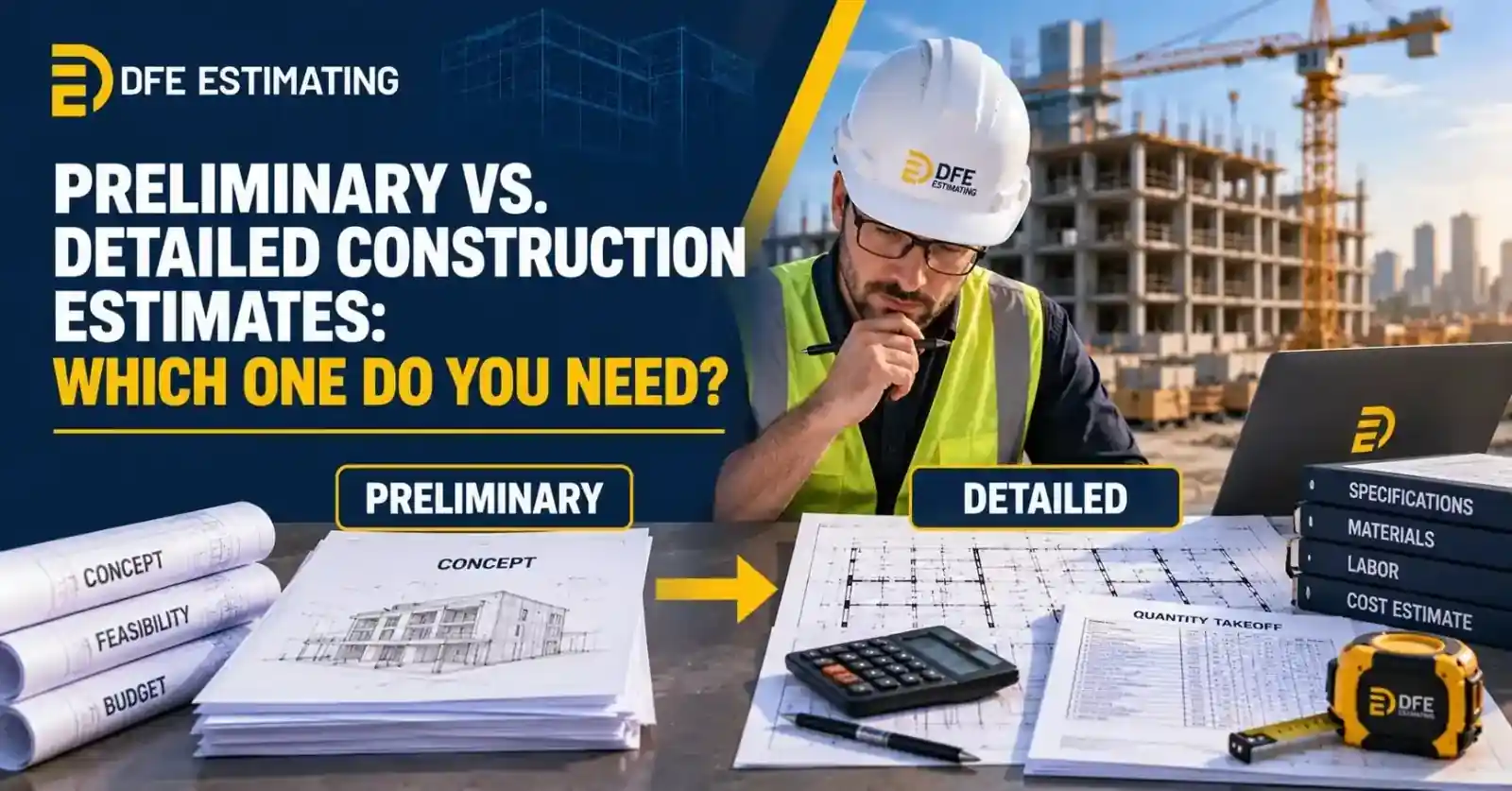
If you are wondering about construction estimating services cost, there is no single price for every project. In 2026, professional construction estimating can range from a few hundred dollars for a simple single-trade takeoff to several thousand dollars for a detailed, multi-trade commercial estimate.
The final price depends on the size and complexity of the project, number of trades, drawing quality, level of detail, turnaround time, and the type of estimate you need.
How Much Do Construction Estimating Services Cost?
The construction estimating services cost typically ranges from $150 for a simple single-trade estimate to $2,500+ for complex commercial projects. Monthly support may cost $1,350 to $3,200+, while dedicated estimator pricing is usually customized.
| Estimating Service | Typical 2026 Cost |
| Single-trade estimate | $150–$600+ |
| Small residential estimate | $250–$700+ |
| Multi-trade estimate | $600–$1,800+ |
| Full commercial estimate | $1,200–$2,500+ |
| Complex commercial estimate | $2,500+ |
| Monthly estimating support | $1,350–$3,200+ |
| Dedicated estimator | Custom pricing |
These are market ranges, not fixed industry prices. Actual construction estimating fees vary based on project size, scope, trades, drawing complexity, and turnaround time. This means construction estimate pricing and construction estimating rates can differ significantly between projects and providers.
What Is Included in a Construction Estimating Service?
A professional construction estimating service covers the work needed to turn project plans into a clear, usable construction cost breakdown. The exact scope depends on the project and estimate type.
A detailed quantity takeoff identifies:
- Material quantities and measurements
- Area calculations
- Trade quantities
- Material takeoffs by scope
Material Cost Estimating
This includes current material prices, supplier pricing, and local market rates to create realistic material costs.
Labor Cost Estimating
Estimators calculate labor rates, crew requirements, and installation costs for each trade.
Bid Preparation
A bid estimate may include cost breakdowns, bid worksheets, trade pricing, and a bid-ready estimate.
Final Estimate Reports
Depending on the project, deliverables may include:
- Excel or PDF reports
- Marked-up plans
- BOQ (Bill of Quantities)
- CSI division breakdowns
Construction Estimating Pricing Models
Construction estimating services are usually priced in four ways. The best option depends on your project scope, bid volume, and estimating needs.
Flat-Fee Construction Estimating
A flat-fee construction estimating model gives you a fixed price for a defined project. It makes budgeting easier and works well when the plans and scope are clear. Your per-project estimating cost depends on project size, trades, and complexity.
Hourly Construction Estimator Rates
An hourly model charges for the estimator’s time. The construction estimator hourly rate can vary based on experience and specialization. It can work well for small projects, changing scopes, or tasks that are difficult to price upfront.
Monthly Construction Estimating Packages
Monthly support can suit contractors with regular bid work. It may include recurring estimates, multiple bids, dedicated estimating support, and faster turnaround. Subcontractors handling several bids at once can learn more in our subcontractor cost estimating guide.
Percentage-Based Estimating Fees
Some providers charge a percentage of the project value. However, this is not a universal pricing model, so always confirm the fee structure before hiring an estimator.
Construction Estimating Cost by Project Type
The construction estimating cost changes with the project type, size, and level of detail required. Residential estimates are often simpler, while commercial and industrial projects may involve more trades, drawings, and specifications.
Residential Construction Estimating Cost
Residential estimating may cover single-family homes, remodeling, additions, and smaller projects. Costs are usually lower when the scope and plans are straightforward.
Commercial Construction Estimating Cost
Commercial estimates for retail stores, offices, restaurants, multifamily properties, and commercial buildings often require detailed takeoffs across several trades.
Industrial Construction Estimating Cost
Industrial projects can cost more to estimate because they may include multiple trades, MEP systems, structural work, and complex specifications.
Single-Trade vs. Multi-Trade Estimating Cost
| Estimate Type | Complexity | Typical Cost |
| Single trade | Low | Lower |
| 2–4 trades | Medium | Moderate |
| Multi-trade | High | Higher |
| Full commercial | Very high | Custom |
As the number of trades and project details increases, the estimating workload generally increases too.
What Factors Affect Construction Estimating Services Cost?
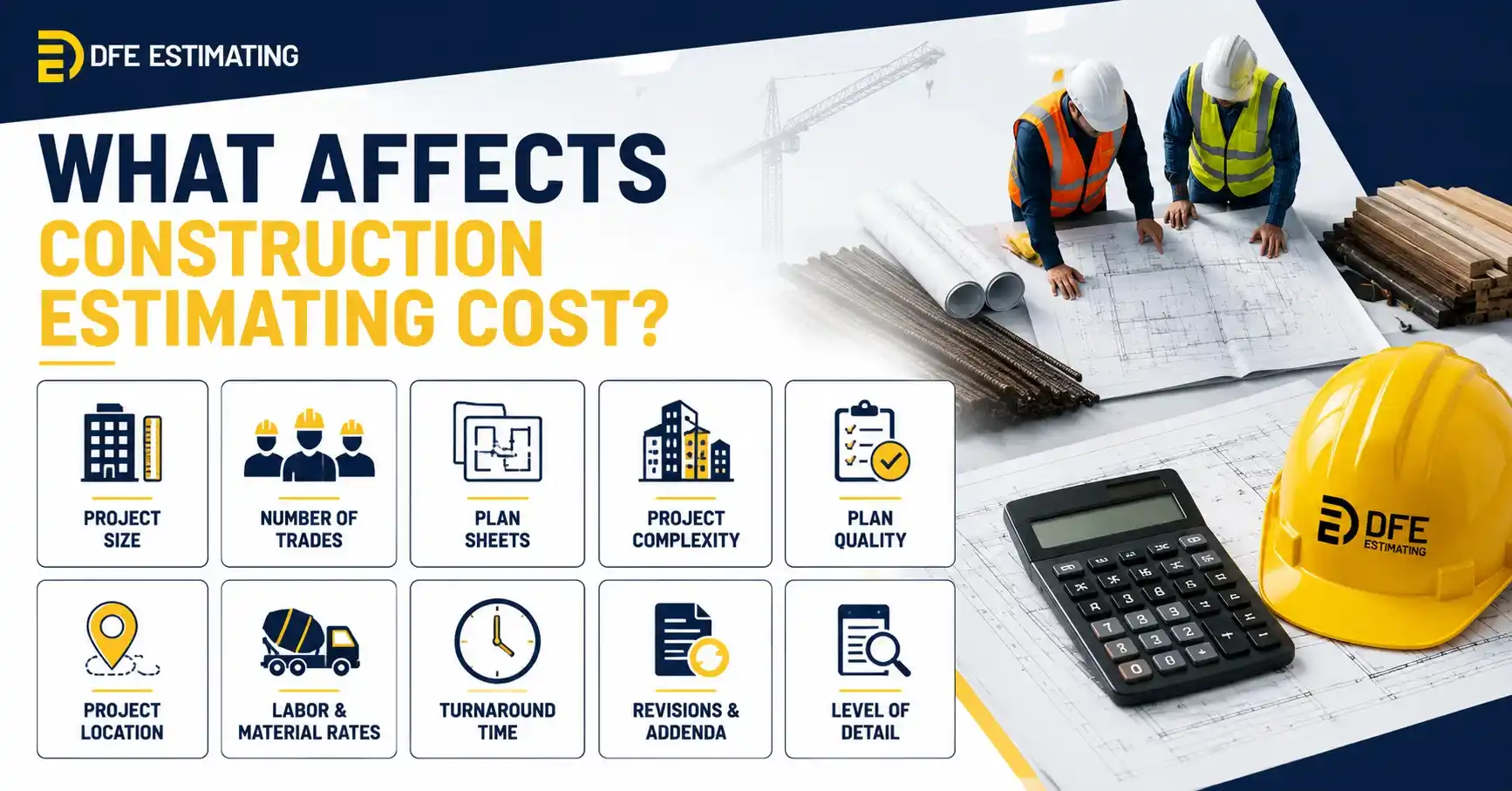
Several factors can change the construction estimating services cost. The biggest ones are project size, scope, complexity, and the level of detail required.
Project Size and Number of Trades
Larger projects usually require more takeoff work. Estimates covering concrete, framing, masonry, roofing, drywall, flooring, electrical, plumbing, HVAC, and MEP also require more time.
Drawings and Project Complexity
The number of plan sheets, quality of construction plans, and project specifications can affect the estimating workload. Clear plans are easier to review than incomplete or complex drawings.
Location and Pricing
Project location matters because local labor rates and material pricing vary by market.
Turnaround and Revisions
A tight bid deadline or rush turnaround may increase the fee. Plan revisions and addenda can also require additional estimating work.
Level of Detail
A basic budget estimate costs less than a detailed estimate with quantities, labor, materials, and a complete cost breakdown.
How Much Does a Construction Estimator Charge Per Hour?
A construction estimator hourly rate can vary based on experience, project type, location, and scope. Freelance and remote estimators may offer flexible rates, while experienced or specialized estimators often charge more for advanced commercial, MEP, or multi-trade work.
The rate can also differ between domestic and offshore estimating services. Offshore options may have lower hourly costs, while domestic estimators may offer deeper familiarity with local labor rates, material pricing, and construction practices.
Common factors include:
- Freelance estimator: Flexible for individual projects.
- Remote estimator: Useful for ongoing estimating support.
- Experienced estimator: Often charges more for specialized knowledge.
- Specialized estimator: May focus on specific trades or complex projects.
- Domestic vs. offshore: Rates and local market expertise can differ.
However, hourly rate alone should not determine your choice. A lower estimator hourly cost may result in a higher total cost if the work takes longer or requires more revisions. Compare the total project cost, turnaround time, accuracy, and deliverables before choosing a provider.
How Much Does It Cost to Hire an In-House Construction Estimator?
Hiring an in-house construction estimator costs more than salary alone. Employers also pay for benefits, payroll costs, software, equipment, training, and office overhead.
Main Costs
- Salary: The estimator’s base annual pay.
- Benefits and payroll: Taxes, insurance, healthcare, and other employee benefits.
- Estimating software: Takeoff, estimating, and project management tools.
- Training: Ongoing education and software training.
- Equipment: Computer, monitors, and other office technology.
- Office overhead: Workspace, utilities, and related expenses.
- Paid time between bids: You continue paying the estimator even when estimating demand is low.
Together, these expenses create the fully loaded estimator cost. This is the true cost of maintaining an in-house estimating position and can be substantially higher than the employee’s base wage. For contractors with changing bid volumes, outsourced estimating can provide estimating capacity without carrying all of these fixed costs.
Outsourced Construction Estimating vs. In-House Estimating
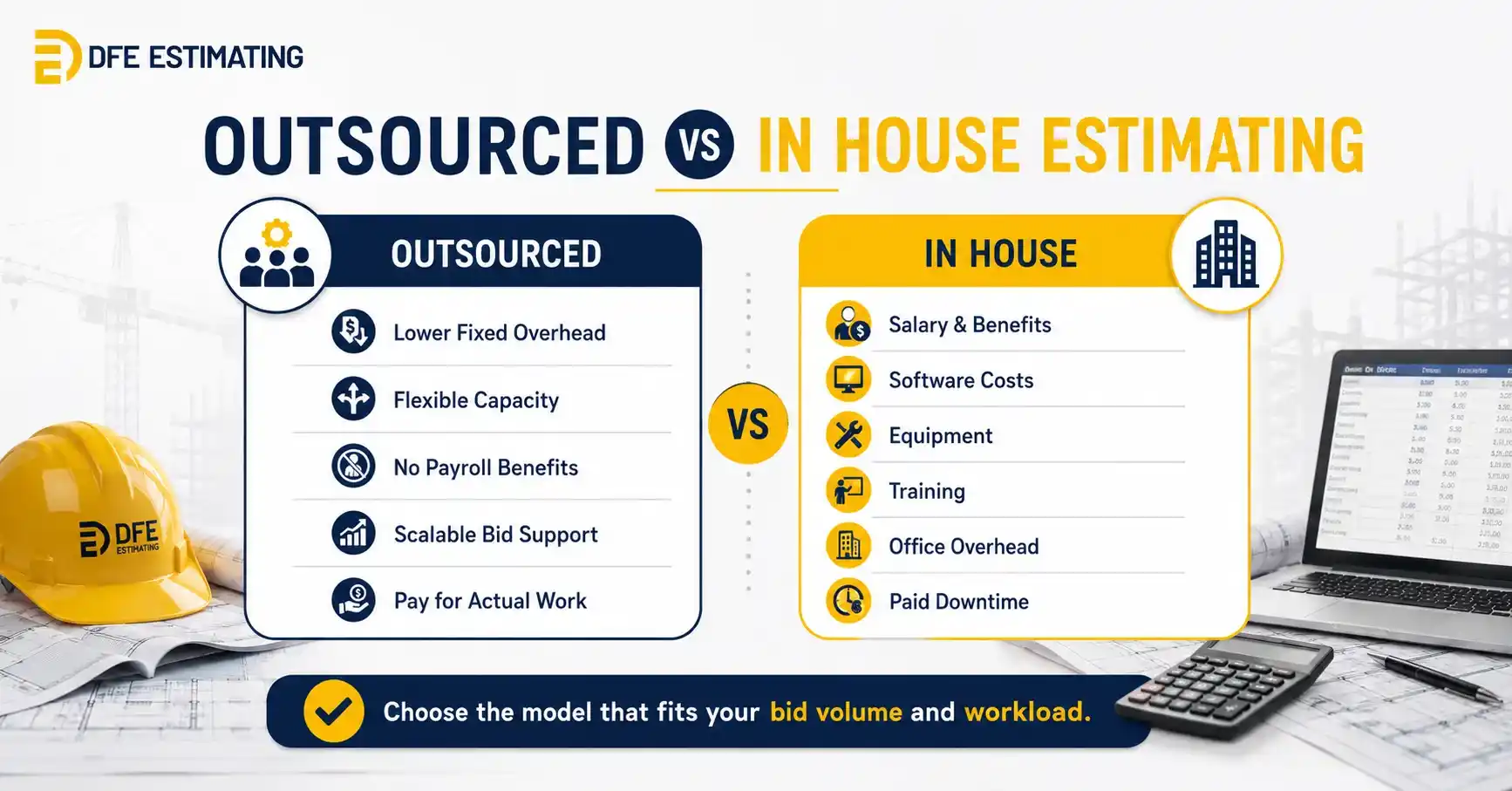
For many contractors, outsourced construction estimating offers more flexibility and lower fixed overhead than maintaining an in-house estimator. However, the right choice depends on your workload, budget, and long-term needs.
| Factor | Outsourced Estimator | In-House Estimator |
| Hiring cost | Low | High |
| Payroll | No | Yes |
| Software cost | Usually included | Separate |
| Flexibility | High | Lower |
| Monthly overhead | Lower | Higher |
| Bid volume | Easy to scale | Limited by staff |
| Turnaround | Provider dependent | Team dependent |
When Outsourcing Makes More Sense
Outsourcing can be useful for:
- Small contractors and subcontractors
- Growing construction companies
- High or changing bid volume
- Temporary estimating workloads
- Tight bid deadlines
- Companies without an estimating department
When In-House May Make Sense
An in-house estimator may be better when a company has steady, high bid volume and needs daily estimating support, direct team collaboration, and greater control over its estimating process.
Is Outsourcing Construction Estimating Cheaper?
It can be, especially when estimating workload changes from month to month or when a company does not have enough bid volume to justify a full-time estimator. Outsourcing lets contractors pay for estimating work when they need it instead of carrying all the costs of an in-house employee.
Key advantages can include:
- No full-time salary: Pay for the estimating work you need.
- No employee benefits: Avoid additional payroll and benefit costs.
- Less software overhead: Estimating tools may be included by the service provider.
- Flexible capacity: Increase or reduce estimating support as bid volume changes.
- Pay for actual work: Useful for contractors with irregular project pipelines.
However, outsourcing is not always cheaper. Companies with a steady, high volume of bids may benefit from an in-house estimator. The best choice depends on your bid volume, project complexity, estimating workload, and long-term business needs.
What Does a Professional Construction Estimate Include?
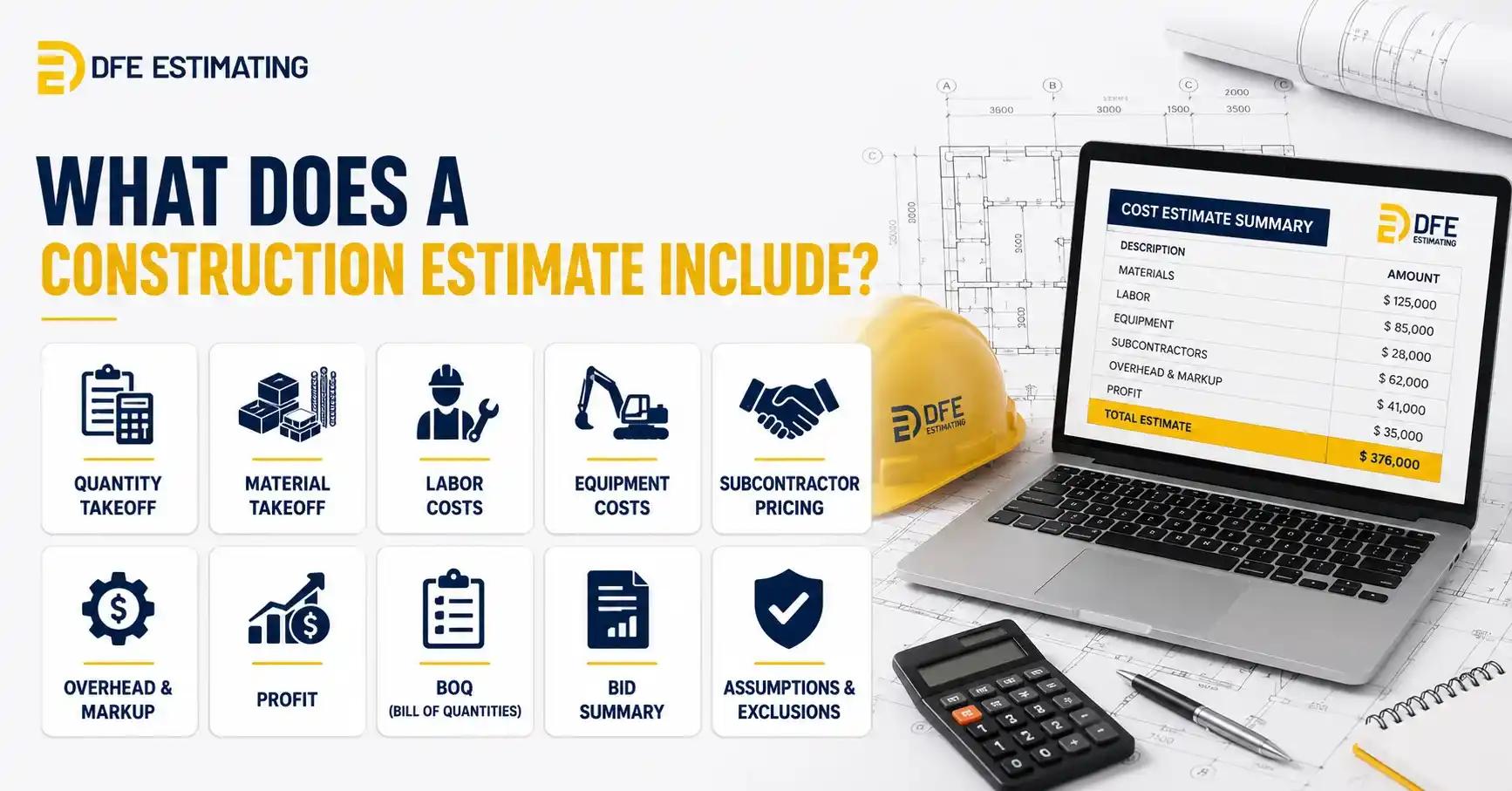
A professional construction estimate gives contractors a clear view of the expected project cost. It combines quantities, pricing, labor, and other project expenses into an organized cost breakdown.
A detailed estimate may include:
- Quantity takeoff: Measured quantities for each construction trade.
- Material takeoff: Required materials and their estimated costs.
- Labor costs: Labor rates and installation costs.
- Equipment costs: Equipment needed to complete the work.
- Subcontractor pricing: Costs for specialized subcontracted work.
- Overhead and markup: Business and project-related costs.
- Profit: The planned profit included in the bid.
- BOQ: A Bill of Quantities with measurable project items.
- Bid summary: A clear overview of the total estimated cost.
- Assumptions and exclusions: Items or conditions that may affect the final price.
The exact deliverables depend on the project scope and the level of detail requested.
How Long Does a Construction Estimate Take?
The time required for a construction estimate depends on the project size, number of trades, drawing details, and required level of accuracy. Smaller or standard estimates may be completed within 24–48 hours, while larger commercial and multi-trade estimates can take several days.
Single-Trade Estimates
Simple takeoffs, such as concrete, drywall, or flooring, can often be completed within 24–48 hours, depending on the project.
Residential Estimates
Small residential projects commonly take 24–48 hours, depending on the plans and scope.
Multi-Trade Estimates
Projects covering several trades usually need more review and may take several days.
Commercial Estimates
Large commercial projects can require 3–5 business days or longer, depending on complexity.
Rush Estimates
Rush estimating may be available when a bid deadline is close, but the provider should confirm the delivery time before work begins. See typical timelines in our guide to how long a construction estimate takes.
How to Choose a Construction Estimating Service
Choosing the right estimating service can help you get reliable quantities and realistic project costs. Before hiring, check:
- Experience: Look for experience with projects similar to yours.
- Trade coverage: Confirm they handle the trades you need.
- Sample estimates: Review sample takeoffs and estimate reports.
- Turnaround: Confirm delivery time and your bid deadline.
- Revisions: Ask how plan changes and revisions are handled.
- Software: Check the takeoff and estimating methods they use.
- Deliverables: Confirm whether you receive quantity takeoffs, cost breakdowns, BOQ, and bid summaries.
- Clear quote: Ask for pricing in writing.
- Pricing model: Confirm whether the fee is fixed, hourly, or variable.
How to Get an Accurate Construction Estimating Services Quote
To receive an accurate quote, provide:
- Construction drawings
- Project specifications
- Scope of work
- Project location
- Required trades
- Bid deadline
- Desired deliverables
- Previous estimates or supplier quotes
The estimator can then review your documents and provide project-specific construction estimating pricing based on the actual scope.
Why Professional Construction Estimating Is Worth the Cost
Professional estimating can do more than produce a project price. It can help contractors work faster, bid with greater confidence, and manage project costs more effectively.
A reliable estimating service can help you:
- Save estimating time by reducing hours spent on takeoffs and pricing.
- Reduce missed quantities that could affect your bid.
- Limit bidding errors through a structured cost review.
- Submit more bids when your team has limited estimating capacity.
- Improve bid confidence with clear quantities and cost breakdowns.
- Protect profit margins by accounting for project costs before bidding.
- Make better go or no-go decisions by understanding the potential project value.
- Handle higher bid volume without immediately adding full-time staff.
DFE Estimating Services
DFE Estimating provides support for contractors and subcontractors through construction cost estimating, quantity takeoffs, material takeoffs, bid estimates, and outsourced estimating support.
The goal is to give you organized estimating information that helps you prepare competitive bids without adding unnecessary workload to your team. Understanding your construction estimating services cost upfront helps you plan and bid with confidence. Understanding why contractors lose bids shows where accurate estimating pays for itself.
Need a project-specific estimate? Send your plans to DFE Estimating for a quote based on your project scope.
Final Takeaway
The construction estimating services cost depends on several factors, including project size, number of trades, complexity, drawings, turnaround time, and the level of detail required. A simple takeoff may cost much less than a detailed multi-trade commercial estimate.
For many contractors, outsourcing construction estimating can provide flexible estimating support without the fixed overhead of maintaining a full-time estimating department. It can also help teams manage changing bid volumes and tight deadlines.
If you need reliable quantity takeoffs, material pricing, labor costs, or a complete bid estimate, DFE Estimating can review your project and provide a quote based on its actual scope.
Ready to get started? Send your project plans to DFE Estimating and request a project-specific estimating quote.
Frequently Asked Questions
How much does a construction estimating service cost?
It can range from about $150 to $2,500+, depending on project size, trades, complexity, and detail required.
How much does a construction estimator charge per hour?
Hourly rates vary by experience, specialization, location, and project scope.
How much does a construction estimate cost?
A simple estimate may cost a few hundred dollars, while complex commercial estimates can cost several thousand. Your exact construction estimating services cost depends on the scope you send.
Is it cheaper to outsource construction estimating?
It can be, especially for contractors with changing bid volumes or without a full-time estimating team.
How much does it cost to hire a construction estimator?
The total cost includes salary, benefits, software, equipment, training, and overhead.
What affects estimating costs?
Project size, number of trades, drawings, complexity, location, revisions, and turnaround time can all affect the cost. These factors together determine your final construction estimating services cost.
How long does an estimate take?
Simple estimates may take 24–48 hours, while larger projects can take several days.
What is included in a construction estimate?
Typically, takeoffs, labor, materials, equipment, subcontractor pricing, and cost breakdowns are included. These line items are what determine your final construction estimating services cost.
Is estimating worth the cost?
Yes. Professional estimating can save time and support better bidding decisions. The upfront construction estimating services cost is usually much lower than the cost of a missed quantity or bidding error.
How do I get a quote?
Send your plans, scope, specifications, location, trades, and bid deadline to DFE Estimating. The estimator will review your documents and reply with your construction estimating services cost.